
China / Shanghai
Dr. Abdul Aziz Nour Ashr, Director General of the International Center for Political and Strategic Studies (ICPSS) in Sudan, commended the continued progress in strengthening Arab–Chinese relations across all fields—particularly economic, cultural, and intellectual cooperation. He noted that China has consistently been the largest trading partner of Arab countries, and that this relationship has evolved into joint construction of the Belt and Road Initiative, through which more than 200 cooperative projects have been implemented, benefiting nearly two billion people. This reflects a strong mutual desire not only to sustain these relations but to advance them significantly.
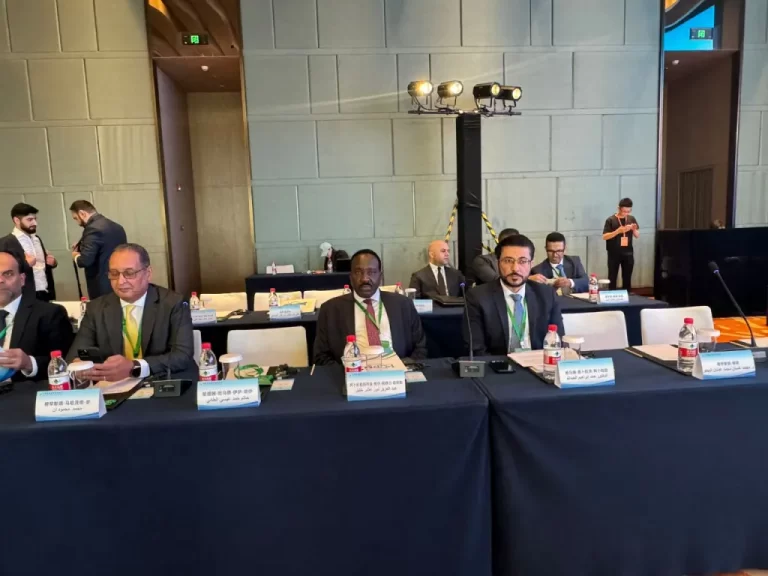
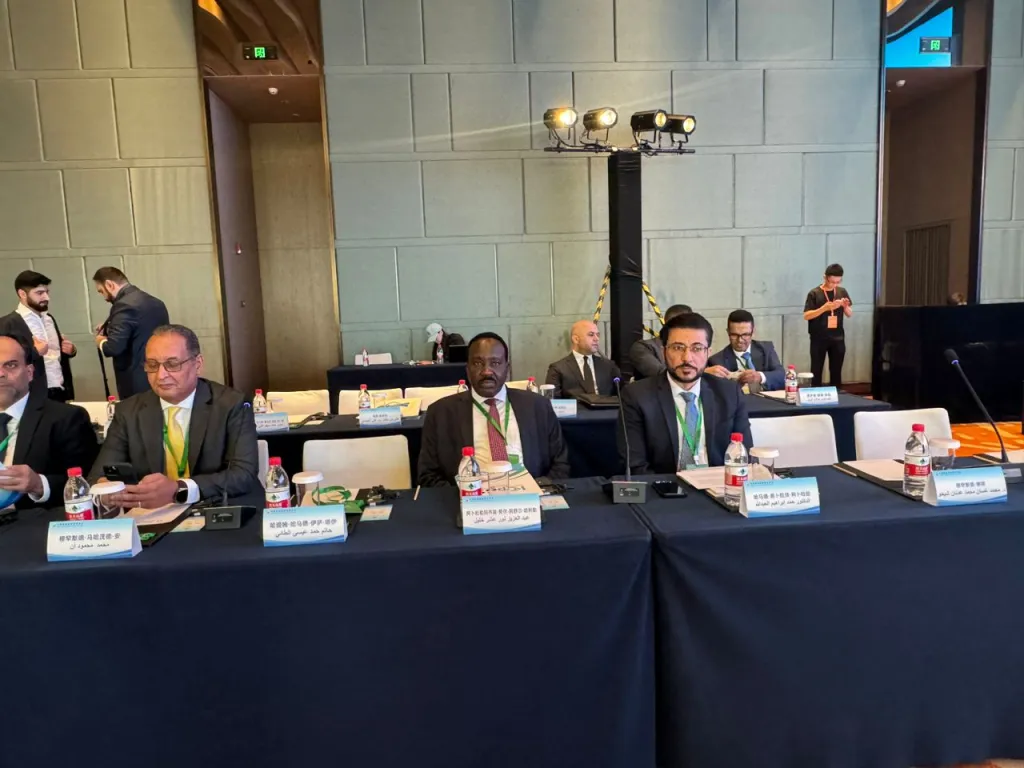
These remarks were made in the paper presented by the Director General of the Sudanese International Center for Political and Strategic Studies (ICPSS) at the first meeting of the China–Arab Think Tanks Association held in Shanghai from September 26–29. He added: “China imports half of its crude oil from the Arab region, and China’s moderate positions on international issues encourage Arab countries to deepen cooperation with China. This has led to a significant rise in bilateral trade, with expectations that it may reach USD 600 billion in the coming period.”
He continued: “Extending the long-standing friendship that began along the ancient Silk Road, China and Arab countries have now become partners based on mutual assistance, equality, mutual benefit, and comprehensive mutual learning. This partnership has expanded and diversified cooperation horizons, focusing on key areas such as technological innovation, space technology, fifth-generation (5G) technology, industrial transformation, green development, and infrastructure, alongside many other fields.”
Addressing the rapidly evolving global context, Dr. Abdul Aziz Nour Ashr emphasized in his paper that the need for think tanks has become increasingly urgent. Countries are now prioritizing the establishment of such centers, which have become one of the most important elements of soft power. He explained that this partnership is especially important at a time when think tanks in the Arab region are emerging as vital tools for bridging the gap between knowledge and decision-makers. These centers now represent a form of unofficial diplomacy—Think Tank Diplomacy—and play a significant role in supporting decision-making, developing strategies, proposing policies, analyzing developments, and forecasting the future to contribute to sound and informed decisions. Despite their limited number and influence, their existence is essential to fulfilling developmental and cultural roles and to formulating both immediate and long-term plans.
He added: “This partnership and commitment to a comprehensive relationship provide an excellent opportunity to ensure continuous communication in an atmosphere of trust and mutual respect in service of the public interest for all parties. Sudan, in particular, is in great need of this partnership given the severe crises the country is experiencing—reaching an existential level that threatens the survival of the state—stemming from an inability to manage diversity, the absence of strategic vision, and weak intellectual support from research and think tank institutions. The advanced thinking, flexibility, and openness to the world demonstrated by Chinese think tanks give us full confidence that this partnership will have a major positive impact on the Arab region.”
He clarified: “At the International Center for Political and Strategic Studies (ICPSS), we have identified our areas of interest and attracted an elite group of researchers and experts whose intellectual output we can invest in by conducting studies and research that deepen the partnership between our two countries.”
Regarding the importance of the forum, Dr. Abdul Aziz Ashr explained that the China–Arab Cooperation Forum represents an inspiring success story. It has established 19 important mechanisms, including ministerial conferences and strategic political dialogues, and issued 85 key outcome documents. China–Arab cooperation has evolved from a primary focus on economy and trade to a troika of economy, security, and culture aimed at achieving sustainable development. He noted that the forum added a new dimension to the relationship, reflecting the growth of popular and intellectual ties and belief in the role of Track II diplomacy. In early 2024, the China–Arab Think Tanks Association was launched as part of efforts to sustain friendship and deepen the strategic partnership between China and the Arab League and its member states, with the aim of achieving comprehensive cooperation across cultural, economic, and intellectual dimensions.
He further stated that the President of China has introduced several initiatives—Global Development Initiative, Belt and Road Initiative, and Global Security Initiative. These inspiring initiatives have reinforced expectations regarding China’s significant role in global development and in building broad partnerships, particularly with Arab countries, across vital sectors. Ensuring the sustainability of this partnership requires active engagement by think tanks and research institutions on both sides to synthesize issues, conduct studies and research, and provide advice and recommendations so that strategic orientations are grounded in solid scientific foundations. These initiatives also reflect China’s continued support for Arab countries in independently identifying development paths suited to their national conditions. China remains a strong supporter of Arab political positions, adopting Arab perspectives on key issues—especially the Palestinian cause—as well as situations in Sudan, Libya, Syria, Iraq, Yemen, and others.
In concluding his paper, Dr. Abdul Aziz Nour Ashr expressed hope that the forum would produce recommendations and outcomes that strengthen and activate the work of Chinese and Arab think tanks, transforming them into influential soft powers. To achieve this, he stressed the need to:
- Develop a long-term strategic vision for think tanks to enhance their contribution to society, decision-making, and foreign policy;
- Expand field studies to better understand realities, issue framing, and public opinion and media guidance;
- Conclude agreements and understandings between Chinese and Arab think tanks for knowledge transfer and continuous training;
- Maintain ongoing communication between Arab think tanks and international institutions to foster mutual respect and trust in service of the public good;
- Open pathways for young talents and experienced professionals to join think tanks, fostering a new generation of young thinkers.