

and Geostrategic Location
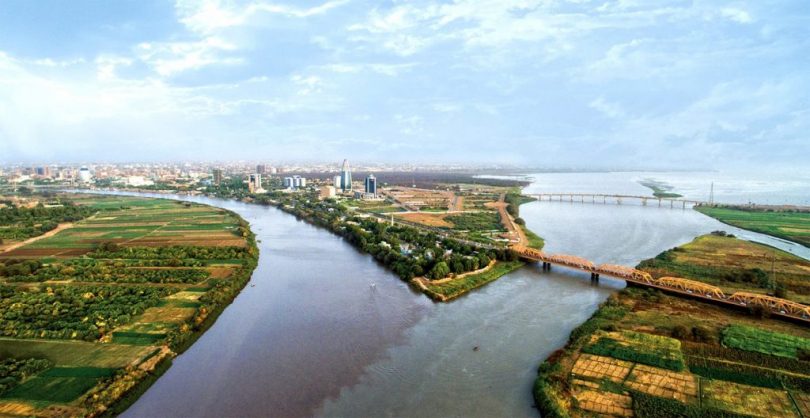
Since ancient times, Sudanese peoples and kingdoms have shared with other nations the abundant resources of this vast land, split by the world’s longest river—the eternal Nile—on whose banks one of the oldest human civilizations, the Kushite civilization, arose. Sudan has long received successive waves of human migration and the spread of the Abrahamic religions: Judaism, Christianity, and Islam.
However, modern Sudan fell victim to what is known in Africa’s resource-rich conflict zones as the “resource curse.” Its vast underground and surface wealth, along with its unique geostrategic position, became a constant incentive for invaders throughout ancient, medieval, and modern history. The campaign of Abdullah ibn Abi Al-Sarh against the Christian kingdom of Makuria in 651 AD, which ended with the Baqt Treaty, was driven—at its analytical core—by the pursuit of manpower and economic resources, despite other declared objectives.
The Christian and Islamic kingdoms in Sudan were repeatedly subjected to external attacks targeting their human and economic resources. In Darfur, collective memory still recalls the phenomenon of “Um Kawakiya”—a period of chaos caused by foreign raiders resembling today’s Janjaweed in behavior, motives, and destruction.
Historical evidence shows that the main motives behind Muhammad Ali Pasha’s invasion of Sudan in 1821 were “men and gold,” two essential elements of his ambition to build an empire parallel to the Ottoman Empire.
During the Anglo-Egyptian colonization (1898–1956), Britain achieved major economic gains by exploiting Sudan’s resources. Cotton from the Gezira Scheme competed globally with American cotton, while Sudanese agricultural exports helped support Britain’s overstretched economy. As noted by Norwegian historian Faugier, the British administration divided Sudan into two parts:
“Useful Sudan”—the resource-rich exploited regions, and
“Non-useful Sudan”—the rest.
To global powers, Sudan has long been viewed either as a vast reserve of natural resources or as a territory to be destabilized to prevent its awakening—similar to Napoleon’s famous warning about China: “Let China sleep; for when she wakes, she will shake the world.”